API Tools & Testers
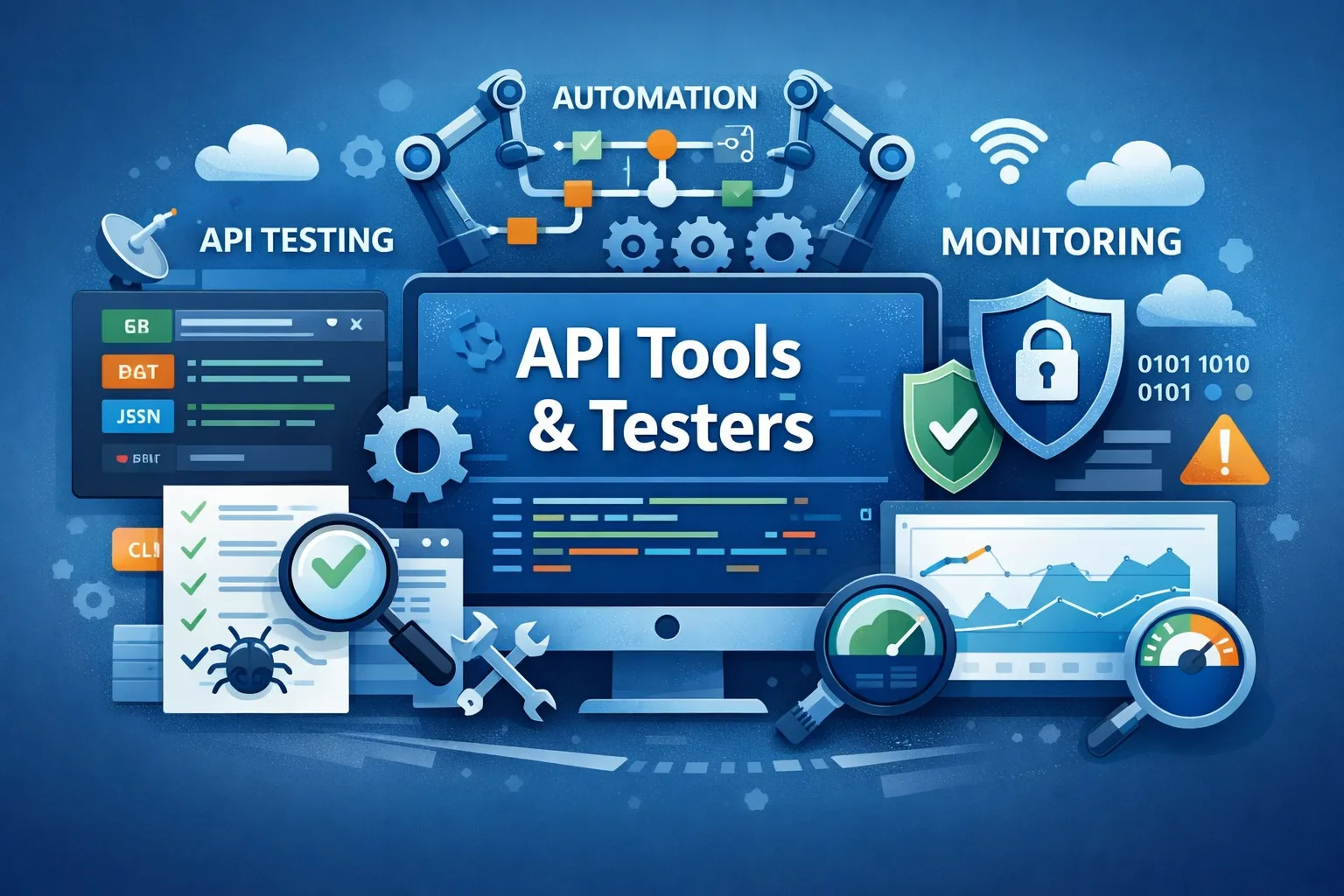
In the modern digital world, software systems no longer work in isolation. Applications communicate with each other constantly, exchanging data and triggering actions in real time. At the heart of this communication lies the Application Programming Interface, commonly known as an API. APIs make it possible for mobile apps, web platforms, cloud services, and enterprise systems to interact smoothly and efficiently.
As APIs become more critical, the need to build, test, secure, and monitor them properly also increases. This is where API Tools & Testers play a vital role. These tools help developers, testers, and organizations ensure that APIs work correctly, perform well under load, remain secure, and deliver a reliable experience to users worldwide.
This content is designed to help users clearly understand what API tools and testers are, why they are important, how they are used, and how they add real value throughout the API lifecycle.
What Are API Tools & Testers?
API tools and testers are software solutions designed to help teams work with APIs effectively. They support a wide range of activities including API design, development, testing, debugging, automation, performance analysis, security validation, monitoring, and documentation.
Unlike traditional software testing that focuses on user interfaces, API testing works directly at the service level. This allows teams to validate core functionality before it reaches end users. API tools give users visibility and control over how data flows between systems, ensuring reliability and consistency.
These tools are used across industries such as software development, finance, healthcare, e-commerce, logistics, gaming, and cloud computing.
Why API Tools & Testers Are Important
APIs often act as the backbone of digital products. If an API fails, the entire system can break. API tools and testers help prevent such failures by identifying problems early and maintaining high-quality standards.
They are important because they:
-
Reduce bugs and system failures
-
Improve development speed
-
Ensure consistent data exchange
-
Protect sensitive information
-
Support scalable system growth
-
Improve overall user experience
Without proper API testing and tooling, organizations risk downtime, security breaches, performance issues, and integration failures.
Understanding the API Lifecycle
APIs go through multiple stages from idea to production and beyond. API tools and testers support each stage of this lifecycle.
API Design and Planning
Before writing any code, APIs must be planned carefully. Design-focused API tools help define endpoints, request formats, response structures, and error handling rules. This stage ensures that APIs are consistent, easy to use, and future-proof.
Clear API design helps teams avoid confusion, reduces rework, and improves collaboration between developers and stakeholders.
API Development
During development, API tools help developers build and configure endpoints, manage parameters, handle authentication, and connect APIs to databases or services. These tools often support environment management so developers can test APIs locally, in staging, or in production-like conditions.
Good API development tools reduce manual effort and help developers focus on business logic instead of repetitive setup tasks.
API Testing
API testing is one of the most important phases. API testers verify that APIs behave exactly as expected under different conditions. This includes checking response status codes, data accuracy, headers, authentication behavior, and error handling.
API testing tools help catch issues early, making them cheaper and easier to fix.
API Deployment
Once APIs are tested and ready, they are deployed to production environments. Deployment tools often integrate with CI/CD pipelines to automate releases. API tools ensure that new versions are rolled out safely without breaking existing integrations.
API Monitoring and Maintenance
After deployment, APIs must be continuously monitored. API monitoring tools track uptime, response times, error rates, and traffic patterns. This helps teams detect problems quickly and maintain high availability.
Monitoring also provides insights into how APIs are used globally, helping teams improve performance and plan capacity.
Types of API Tools & Testers
API tools are not limited to one function. Different tools serve different purposes depending on user needs.
Manual API Testing Tools
Manual API testing tools allow users to send requests to APIs and inspect responses visually. These tools are especially useful during development and debugging.
They help users:
-
Test endpoints quickly
-
Validate new features
-
Explore API behavior
-
Troubleshoot errors
Manual testing tools are ideal for learning, experimenting, and verifying individual requests.
Automated API Testing Tools
Automation-focused API testers allow users to create reusable test scripts that run automatically. These tests can be triggered during builds, deployments, or scheduled checks.
Automated API testing helps:
-
Detect regressions early
-
Maintain consistent quality
-
Save time and effort
-
Support continuous delivery
Automation is essential for large projects where APIs change frequently.
API Performance and Load Testing Tools
Performance testing tools evaluate how APIs behave under stress. They simulate real-world traffic to measure response times, throughput, and system stability.
These tools help teams:
-
Identify bottlenecks
-
Optimize scalability
-
Prevent crashes during traffic spikes
-
Ensure consistent global performance
Performance testing is critical for public APIs and high-traffic systems.
API Security Testing Tools
APIs often expose sensitive data and business logic. Security testing tools help identify vulnerabilities and weaknesses before attackers can exploit them.
API security testing focuses on:
-
Authentication and authorization
-
Data validation
-
Token handling
-
Access control
-
Common attack patterns
Security tools help organizations meet compliance requirements and protect user trust.
API Validation and Contract Testing Tools
API validation tools ensure that APIs follow defined specifications. They check whether requests and responses match the expected structure, data types, and rules.
Contract testing helps:
-
Prevent breaking changes
-
Maintain backward compatibility
-
Improve collaboration between teams
-
Reduce integration errors
These tools are especially useful in microservices architectures.
API Mocking and Simulation Tools
Mocking tools allow users to simulate APIs without relying on real backend services. This enables parallel development and early testing.
API mocking helps:
-
Frontend and backend teams work independently
-
Test error scenarios safely
-
Reduce dependency delays
-
Speed up development cycles
Mocks are valuable during early-stage development and integration testing.
API Monitoring and Analytics Tools
Monitoring tools track API health in real time. They provide alerts when something goes wrong and detailed analytics on usage patterns.
These tools help teams:
-
Detect downtime quickly
-
Understand global usage
-
Optimize performance
-
Improve reliability
Analytics also guide future API improvements.
API Documentation Tools
Clear documentation is essential for API adoption. Documentation tools generate and maintain guides that explain how APIs work.
Good API documentation:
-
Reduces onboarding time
-
Improves developer experience
-
Decreases support requests
-
Encourages API usage
Documentation tools ensure that information stays accurate and accessible.
Who Uses API Tools & Testers?
API tools and testers are used by a wide range of users globally.
-
Software developers building applications
-
QA engineers validating system behavior
-
DevOps teams managing deployments
-
Product teams ensuring reliability
-
Enterprises managing complex systems
-
Startups launching new digital products
Any organization that relies on APIs benefits from proper tooling.
Benefits of Using API Tools & Testers
Using API tools delivers real, measurable value.
Improved Quality
Early testing reduces bugs and prevents failures in production.
Faster Development
Automation and reusable workflows save time and effort.
Better Security
Security testing reduces risks and protects sensitive data.
Higher Reliability
Monitoring ensures APIs remain available and stable.
Global Scalability
Performance tools help APIs serve users worldwide efficiently.
API Tools in Global Software Development
In a global environment, APIs must work across regions, time zones, and infrastructures. API tools help teams test APIs under diverse conditions and ensure consistent behavior worldwide.
Global companies rely on API testing to:
-
Support international users
-
Maintain uptime across regions
-
Handle high traffic volumes
-
Meet regional compliance standards
API tools enable scalable, borderless digital systems.
Choosing the Right API Tools
The right API tools depend on project needs and team goals.
When choosing API tools, consider:
-
Ease of use
-
Automation capabilities
-
Security features
-
Performance testing support
-
Integration with CI/CD
-
Scalability and flexibility
The best tools align with workflows and grow with the organization.
Future of API Tools & Testing
API tools continue to evolve alongside technology trends. Automation, observability, and intelligent testing are becoming more advanced. Tools are increasingly focused on proactive issue detection, deeper insights, and smoother integrations.
As systems become more distributed and real-time, API tools will play an even greater role in ensuring reliability and performance on a global scale.
Conclusion
API Tools & Testers are essential for building and maintaining modern software systems. They help teams design, test, secure, monitor, and optimize APIs throughout their lifecycle. By using the right tools, organizations can reduce risk, improve quality, and deliver reliable digital experiences to users around the world.
This category is designed to support global users by providing comprehensive, practical, and user-focused solutions for working with APIs. Whether you are building a simple integration or managing complex enterprise systems, API tools empower you to create APIs that are stable, secure, and ready for the future.
Your email address will not be published. Comments are moderated.
0 Comments on This Post
Leave a Reply
Comments (0)
Spread the Word!
Join Our Developer Community!
Get weekly coding tips, tool updates, and exclusive tutorials straight to your inbox.
Request a Tool
×