Best Practices for Security in Web Apps
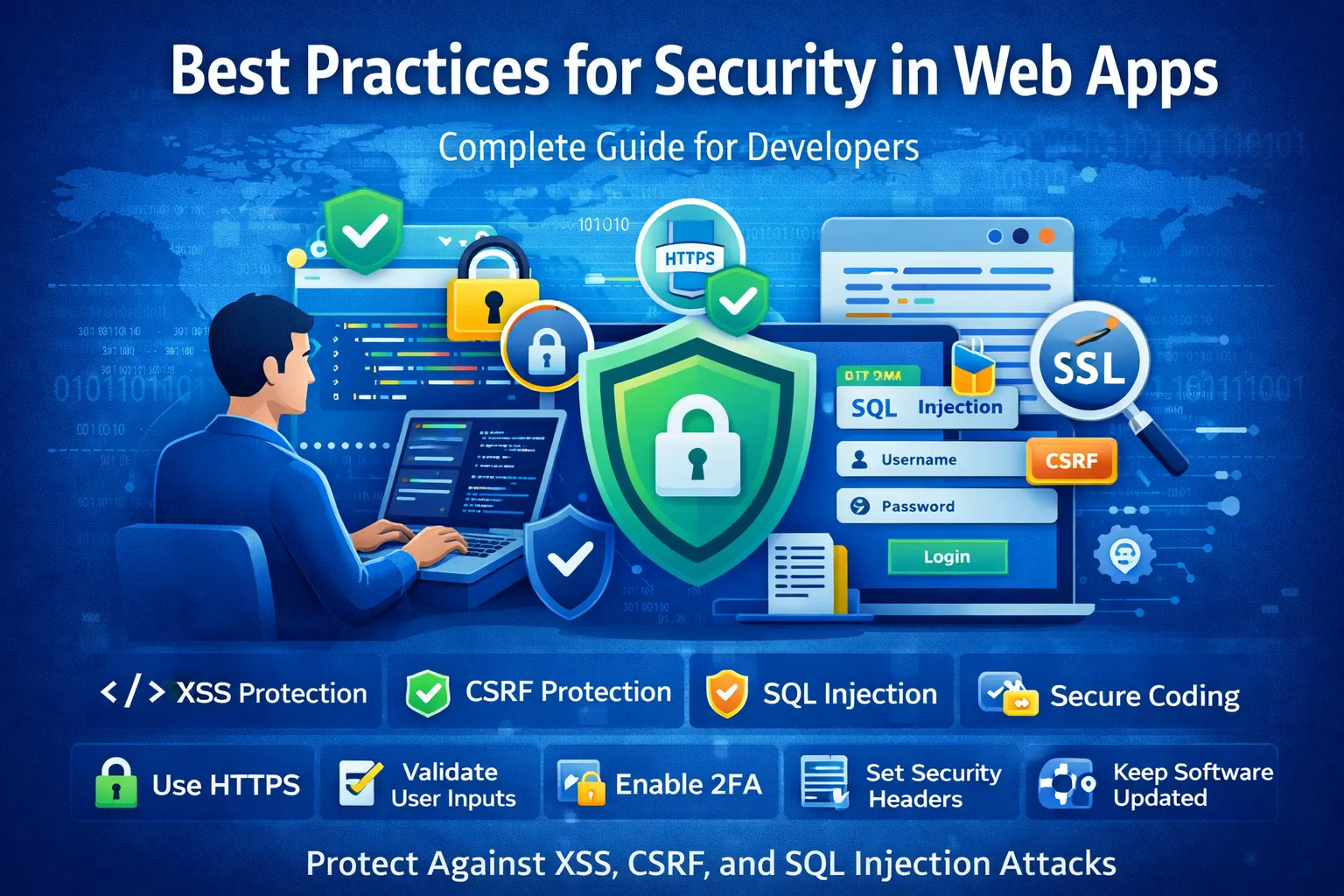
In today’s hyper-connected digital ecosystem, web applications power everything—from banking systems and eCommerce platforms to SaaS tools and social networks. However, this widespread adoption also makes web apps one of the primary targets for cybercriminals worldwide.
From user authentication systems to payment processing gateways, every layer of a web application must be secured against modern threats.
Implementing web application security best practices is no longer optional—it is a critical requirement for protecting sensitive data, maintaining compliance, and ensuring business continuity.
🚨 Why Web Application Security Matters (Global Perspective)
Without robust security measures, organizations face serious risks:
🔴 Data Breaches
Sensitive information such as personal data, financial records, and login credentials can be exposed.
🔴 Financial Loss
Cyberattacks can result in fraud, ransomware payments, and operational downtime.
🔴 Reputation Damage
A single breach can permanently damage brand trust and customer loyalty.
🔴 Legal & Compliance Issues
Failure to comply with regulations like GDPR, HIPAA, or PCI-DSS can lead to heavy penalties.
🔴 SEO & Ranking Impact
Search engines like Google penalize insecure websites, reducing visibility and traffic.
👉 Security is not just a technical need—it’s a business necessity.
⚠️ Common Web Application Vulnerabilities
Understanding vulnerabilities is the first step toward securing your application.
1. SQL Injection (SQLi)
Attackers manipulate database queries to access unauthorized data.
2. Cross-Site Scripting (XSS)
Malicious scripts are injected into web pages viewed by users.
3. Cross-Site Request Forgery (CSRF)
Unauthorized actions are performed on behalf of authenticated users.
4. Broken Authentication
Weak authentication mechanisms allow attackers to hijack accounts.
5. Security Misconfiguration
Default settings, open ports, and unpatched systems create vulnerabilities.
6. Sensitive Data Exposure
Unencrypted data can be intercepted and misused.
7. Insecure APIs
APIs without proper authentication become easy targets.
🛡️ Best Practices for Securing Web Applications
✅ 1. Validate & Sanitize User Input
Never trust user input—always validate and sanitize it.
$email = filter_var($_POST['email'], FILTER_VALIDATE_EMAIL);
✔ Prevents SQL Injection and XSS attacks
✔ Ensures clean and expected data
✅ 2. Use Prepared Statements (Parameterized Queries)
$stmt = $pdo->prepare("SELECT * FROM users WHERE email = ?");
$stmt->execute([$email]);
✔ Eliminates SQL injection risks
✔ Ensures secure database communication
✅ 3. Implement Strong Authentication & Authorization
- Enforce strong password policies
- Use password hashing:
password_hash($password, PASSWORD_BCRYPT);
- Enable Two-Factor Authentication (2FA)
- Use role-based access control (RBAC)
✅ 4. Use HTTPS Everywhere
- Encrypts data in transit
- Prevents man-in-the-middle attacks
- Improves SEO rankings
- Builds user trust globally
✅ 5. Enable CSRF Protection
Use CSRF tokens in forms:
✔ Prevents unauthorized requests
✔ Essential for login and payment systems
✅ 6. Prevent Cross-Site Scripting (XSS)
echo htmlspecialchars($input);
✔ Escape all output data
✔ Use Content Security Policy (CSP)
✅ 7. Secure Session Management
- Regenerate session IDs
- Set session expiration
- Use secure and HttpOnly cookies
✅ 8. Secure File Uploads
- Restrict file types (e.g., JPG, PNG, PDF)
- Rename uploaded files
- Store files outside public directories
✅ 9. Use Security Headers
Important HTTP headers:
- Content-Security-Policy
- X-Frame-Options
- X-Content-Type-Options
- Strict-Transport-Security (HSTS)
✅ 10. Keep Software Updated
Always update:
- PHP version
- Frameworks (CodeIgniter, Laravel, etc.)
- Libraries & plugins
✔ Prevents known vulnerabilities
🔧 Secure Coding Best Practices
- Avoid hardcoded credentials
- Use environment variables (.env files)
- Implement proper error handling
- Log and monitor suspicious activities
- Follow the Principle of Least Privilege (PoLP)
🧰 Essential Tools for Web Application Security
Use industry-standard tools:
- 🔍 SSL Checker
- 🔍 Security Headers Analyzer
- 🔍 Vulnerability Scanner (e.g., OWASP ZAP)
- 🔍 Malware Scanner
- 🔍 Penetration Testing Tools
💻 Security in PHP & CodeIgniter
Since you work with CodeIgniter, it provides built-in security features:
🔹 Features:
- CSRF Protection
- XSS Filtering
- Query Builder (prevents SQL injection)
- Input validation helpers
👉 Example:
$builder->where('email', $email);
✔ Automatically escapes values
✔ Reduces injection risks
🚀 Advanced Security Practices
🔸 Web Application Firewall (WAF)
Filters and blocks malicious HTTP traffic before it reaches your app.
🔸 Content Security Policy (CSP)
Controls which resources can be loaded on your website.
🔸 Data Encryption
Encrypt sensitive data using strong algorithms (AES, RSA).
🔸 API Security
- Use authentication tokens (JWT, OAuth)
- Rate limiting
- API gateways
🔸 Zero Trust Architecture
Never trust any request—always verify.
📊 Web Application Security Checklist
✔ Use HTTPS
✔ Validate all inputs
✔ Prevent SQL Injection
✔ Enable CSRF protection
✔ Implement strong authentication
✔ Secure sessions
✔ Use security headers
✔ Keep software updated
✔ Backup data regularly
✔ Monitor logs and activity
📈 SEO & Security Connection
Security directly impacts SEO:
- HTTPS is a ranking factor
- Secure sites have lower bounce rates
- Trust improves user engagement
- Google flags unsafe websites
👉 A secure website = better rankings + more traffic
🌐 Global Compliance & Standards
To operate globally, follow:
- GDPR (Europe)
- CCPA (California)
- HIPAA (Healthcare – USA)
- PCI-DSS (Payment security)
✔ Ensures legal compliance
✔ Builds international trust
🧠 Conclusion
Web application security is an ongoing process—not a one-time setup.
By following these best practices for security in web apps, developers can:
✔ Protect sensitive data
✔ Prevent cyber attacks
✔ Improve SEO rankings
✔ Build user trust globally
👉 Start implementing security from day one—and keep improving it continuously.
FAQs
🔹 What are web application security best practices?
They are techniques used to protect applications from threats like SQL injection, XSS, and CSRF.
🔹 Why is web security important globally?
It protects user data, ensures compliance, and prevents financial and reputational loss.
🔹 How can I secure my web application?
Use HTTPS, validate input, secure authentication, update software, and follow industry standards.
🔹 Which is the most common vulnerability?
SQL Injection and XSS are among the most common attacks
Your email address will not be published. Comments are moderated.
0 Comments on This Post
Leave a Reply
Comments (0)
Spread the Word!
Join Our Developer Community!
Get weekly coding tips, tool updates, and exclusive tutorials straight to your inbox.
Request a Tool
×