How to Secure APIs in Web Applications
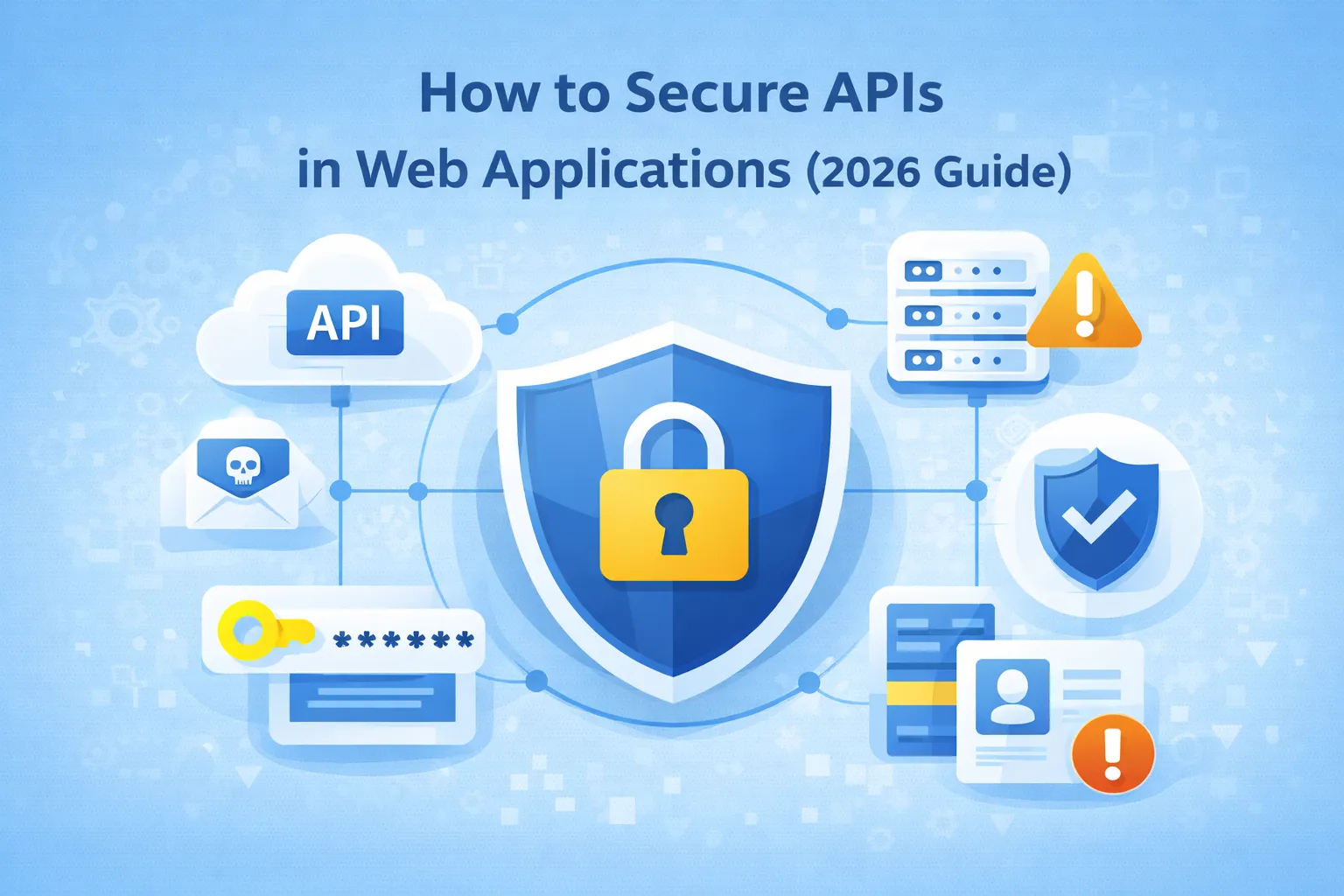
In modern web development, APIs (Application Programming Interfaces) are the backbone of communication between systems.
From mobile apps to web platforms, APIs power everything—from login systems to payment gateways.
But with great power comes great risk.
If your APIs are not secure, attackers can:
- Steal data
- Manipulate requests
- Take control of your system
In this guide, you’ll learn how to secure APIs in web applications, including best practices, authentication methods, and real-world strategies.
🌐 What is API Security?
API security refers to protecting APIs from unauthorized access, abuse, and attacks.
It ensures:
- Data confidentiality
- Data integrity
- Proper authentication
🚨 Why API Security is Important
APIs expose your system to the internet.
👉 If not secured:
- Sensitive data leaks
- Unauthorized access
- Business logic abuse
⚠️ Common API Security Threats
🔴 1. Broken Authentication
Weak login mechanisms.
🔴 2. Injection Attacks
SQL injection via API input.
🔴 3. Data Exposure
Sending sensitive data without encryption.
🔴 4. Rate Limit Attacks
API abuse via multiple requests.
🔴 5. Misconfiguration
Open endpoints without security.
🔴 6. Broken Authorization
Users accessing restricted data.
🛡️ Best Practices to Secure APIs
✅ 1. Use Strong Authentication
Use secure methods like:
- API Keys
- OAuth 2.0
- JWT (JSON Web Tokens)
✅ 2. Implement Authorization
Ensure users access only permitted resources.
✅ 3. Use HTTPS (Encryption)
Encrypt all API communication.
👉 Never use HTTP for APIs.
✅ 4. Validate Input Data
Prevent:
- SQL injection
- XSS
✅ 5. Implement Rate Limiting
Limit requests per user.
👉 Prevents abuse and DDoS.
✅ 6. Use API Gateway
Central control for:
- Authentication
- Monitoring
- Logging
✅ 7. Hide Sensitive Data
Never expose:
- Passwords
- Tokens
- Internal data
✅ 8. Use Logging & Monitoring
Track:
- Requests
- Errors
- Suspicious activity
✅ 9. Use Security Headers
Add headers like:
- Content-Type
- Authorization
✅ 10. Keep APIs Updated
Update:
- Frameworks
- Libraries
🔐 API Authentication Methods
🔑 1. API Key
Simple but less secure.
🔑 2. OAuth 2.0
Used by major platforms.
👉 Secure and scalable.
🔑 3. JWT (JSON Web Token)
Stateless authentication.
🧪 Example: Secure API with JWT (PHP)
$token = jwt_encode(['user_id' => $userId], $secretKey);
👉 Validate token on each request.
⚡ Advanced API Security Techniques
🔐 1. Zero Trust Architecture
Never trust any request.
🔐 2. IP Whitelisting
Allow only trusted IPs.
🔐 3. Data Encryption
Encrypt sensitive data.
🔐 4. API Versioning
Avoid breaking security changes.
🧪 Testing API Security
Use tools:
- Burp Suite
- OWASP ZAP
- Postman
🌍 Global Trends in API Security (2026)
- AI-based API attacks
- Increased API usage
- More focus on microservices
📊 Real-World Impact
Many data breaches happen due to insecure APIs.
👉 Common reasons:
- No authentication
- Poor validation
🚀 Developer Tips (For You 👍)
Since you use PHP & CodeIgniter:
👉 Use:
- CI4 Filters for auth
- CSRF protection
- Validation rules
👉 Avoid:
- Public endpoints without auth
📊 SEO Benefits
Secure APIs:
- Improve performance
- Build trust
- Support scalability
📊 Conclusion
API security is essential in modern web development.
By implementing authentication, encryption, and best practices, you can protect your APIs from attacks.
In 2026, securing APIs is not optional—it is critical.
FAQs
What is API security?
Protecting APIs from unauthorized access.
How to secure APIs?
Use authentication, HTTPS, and validation.
Which method is best?
OAuth and JWT are widely used.
Are APIs vulnerable?
Yes, if not properly secured.
Your email address will not be published. Comments are moderated.
0 Comments on This Post
Leave a Reply
Comments (0)
Spread the Word!
Join Our Developer Community!
Get weekly coding tips, tool updates, and exclusive tutorials straight to your inbox.
Request a Tool
×